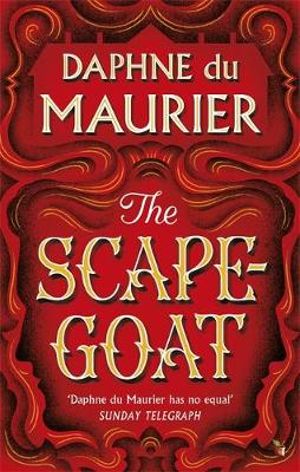
Daphne du Maurier
The Scapegoat
The Scapegoat
Couldn't load pickup availability
A masterful exploration of doubling and identity, and of the dark side of the self. One of du Maurier's most accomplished novels. 'Someone jolted my elbow as I drank and said, "Je vous demande pardon," and as I moved to give him space he turned and stared at me and I at him, and I realised, with a strange sense of shock and fear and nausea all combined, that his face and voice were known to me too well. I was looking at myself.' By chance, two men - one English, the other French - meet in a provincial railway station. Their resemblance is uncanny, and they spend the next few hours talking and drinking - until at last John, the Englishman, falls into a drunken stupor. It's to be his last carefree moment, for when he wakes, his French companion has stolen his identity and disappeared. So John steps into the Frenchman's shoes, and faces a variety of perplexing roles - as owner of a ch teau, director of a failing business, head of a fractious family, and master of nothing. About the Author Daphne du Maurier (1907-89) was born in London, the daughter of the famous actor-manager Sir Gerald du Maurier and granddaughter of George du Maurier, the author and artist. In 1931 her first novel, The Loving Spirit, was published. A biography of her father and three other novels followed, but it was the novel Rebecca that launched her into the literary stratosphere and made her one of the most popular authors of her day. In 1932, du Maurier married Major Frederick Browning, with whom she had three children. Many of du Maurier's bestselling novels and short stories were adapted into award-winning films, including Alfred Hitchcock's The Birds and Nicolas Roeg's Don't Look Now. In 1969 du Maurier was awarded a DBE. She lived most of her life in Cornwall, the setting for many of her books.
Share