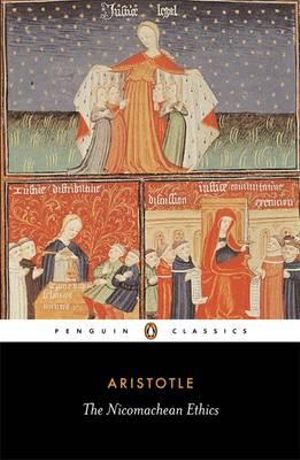
Aristotle
The Nicomachean Ethics
The Nicomachean Ethics
Couldn't load pickup availability
In The Nicomachean Ethics, Aristotle sets out to examine the nature of happiness. He argues that happiness consists in 'activity of the soul in accordance with virtue'-for example, with moral virtues, such as courage, generosity and justice, and intellectual virtues, such as knowledge, wisdom and insight. The Ethics also discusses the nature of practical reasoning, the value and the objects of pleasure, the different forms of friendship and the relationship between individual virtue, society and the State. Aristotle's work has had a profound and lasting influence on all subsequent Western thought about ethical matters. J.A.K. Thomson's translation has been revised by Hugh Tredennick, and is accompanied by a new introduction by Jonathan Barnes. This edition also includes an updated bibliography and a new chronology of Aristotle's life and works. About The Author Aristotle was born at Stageira, in the dominion of the kings of Macedonia, in 384 BC. For twenty years he studied at Athens in the Academy of Plato, on whose death in 347 he left, and, some time later, became tutor of the young Alexander the Great. When Alexander succeeded to the throne of Macedonia in 335, Aristotle returned to Athens and established his school and research institute, the Lyceum, to which his great erudition attracted a large number of scholars. After Alexander's death in 323, anti-Macedonian feeling drove Aristotle out of Athens, and he fled to Chalcis in Euboea, where he died in 322. His writings, which were of extraordinary range, profoundly affected the whole course of ancient and medieval philosophy, and they are still eagerly studied and debated by philosophers today. Very many of them have survived and among the most famous are the Ethics and the Politics.
Share