H. G. Wells Michael Sherborne
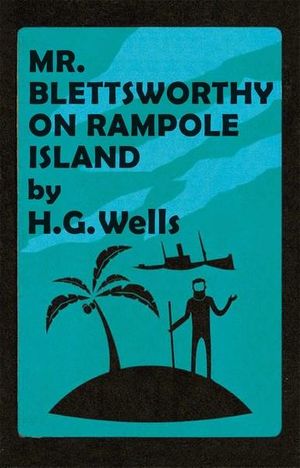
Mr Blettsworthy on Rampole Island
Mr Blettsworthy on Rampole Island
Couldn't load pickup availability
Being the Story of a Gentleman of Culture and Refinement who suffered Shipwreck and saw no Human Beings other than Cruel and Savage Cannibals for several years. How he beheld Megatheria alive and made some notes of their Habits. How he became a Sacred Lunatic. How he did at last escape in a Strange Manner from the Horror and Barbarities of Rampole Island in time to fight in the Great War, and how afterwards he came near returning to that Island forever. With much Amusing and Edifying Matter concerning Manners, Customs, Beliefs, Warfare, Crime, and a Storm at Sea. Concluding with some Reflections upon Life in General and upon these Present Times in Particular. About the Author H. G. Wells, the third son of a small shopkeeper, was born in Bromley in 1866. After two years' apprenticeship in a draper's shop, he became a pupil-teacher at Midhurst Grammar School and won a scholarship to study under T. H. Huxley at the Normal School of Science, South Kensington. He taught biology before becoming a professional writer and journalist. He wrote more than a hundred books, including novels, essays, histories and programmes for world regeneration. Wells, who rose from obscurity to world fame, had an emotionally and intellectually turbulent life. His prophetic imagination was first displayed in pioneering works of science fiction such as The Time Machine (1895), The Island of Doctor Moreau (1896), The Invisible Man (1897) and The War of the Worlds (1898). Later he became an apostle of socialism, science and progress, whose anticipations of a future world state include The Shape of Things to Come (1933). His controversial views on sexual equality and women's rights were expressed in the novels Ann Veronica (1909) and The New Machiavelli (1911). He was, in Bertrand Russell's words, 'an important liberator of thought and action'. Wells drew on his own early struggles in many of his best novels, including Love and Mr Lewisham (1900), Kipps (1905), Tono-Bungay (1909) and The History of Mr Polly (1910). His educational works, some written in collaboration, include The Outline of History (1920) and The Science of Life (1930). His Experiment in Autobiography (2 vols., 1934) reviews his world. He died in London in 1946.
Share