Jean Racine
Four French Plays
Four French Plays
Couldn't load pickup availability
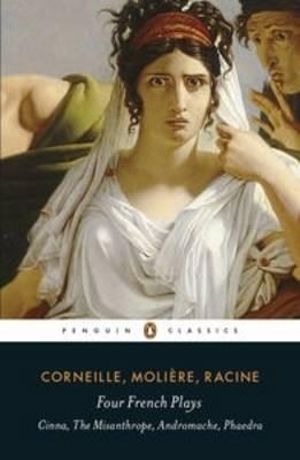
'Just be sincere, and as a man of honour, Say nothing that does not come from the heart.' The plays in this volume - Cinna, The Misanthrope, Andromache and Phaedra - span only thirty-seven years, but make up the defining period of French theatre. In Corneille's Cinna (1641), absolute power is explored in ancient Rome, while Molière's The Misanthrope (1666), the only comedy in this collection, sees its anti-hero reject society for its hypocrisy. Here also are two key plays by Racine: Andromache (1667), recounting the tragedy of Hector's widow after the Trojan War, and Phaedra (1677), showing a mother crossing the bounds of love with her stepson. John Edmunds's new verse translations have been written with performance in mind and capture all the intensity and drama of the originals. In his introduction, Joseph Harris examines how these groundbreaking plays became the models for much of European theatre, and explains their social and cultural context. This edition also contains the dramatists' own prefaces, explanatory notes, a genealogical table and pronunciation guide, as well as a chronology and suggested further reading. About the Author Often hailed as the father of French tragedy, PIERRE CORNEILLE made his name with the tragicomedy Le Cid in 1637. His best-known works include the tragedies Horace (1640) and Cinna (1640). MOLIERE founded the 'Illustre Theatre' troupe and wrote numerous comedies, including Tartuffe (1664), which was banned, Le Misanthrope (1666) and L'Avare (1668). JEAN RACINE became known as one of the period's leading playwrights, with such tragedies as Andromaque (1667), Britannicus (1669) and Phedre (1677). After a varied career as an actor, teacher, and BBC TV national newsreader, JOHN EDMUNDS became the founder-director of Aberystwyth university's department of Theatre, Film and Television Studies. JOSEPH HARRIS is Senior Lecturer at Royal Holloway, University of London and author of Hidden Agendas: Cross-Dressing in Seventeenth-Century France (2005).
Share